
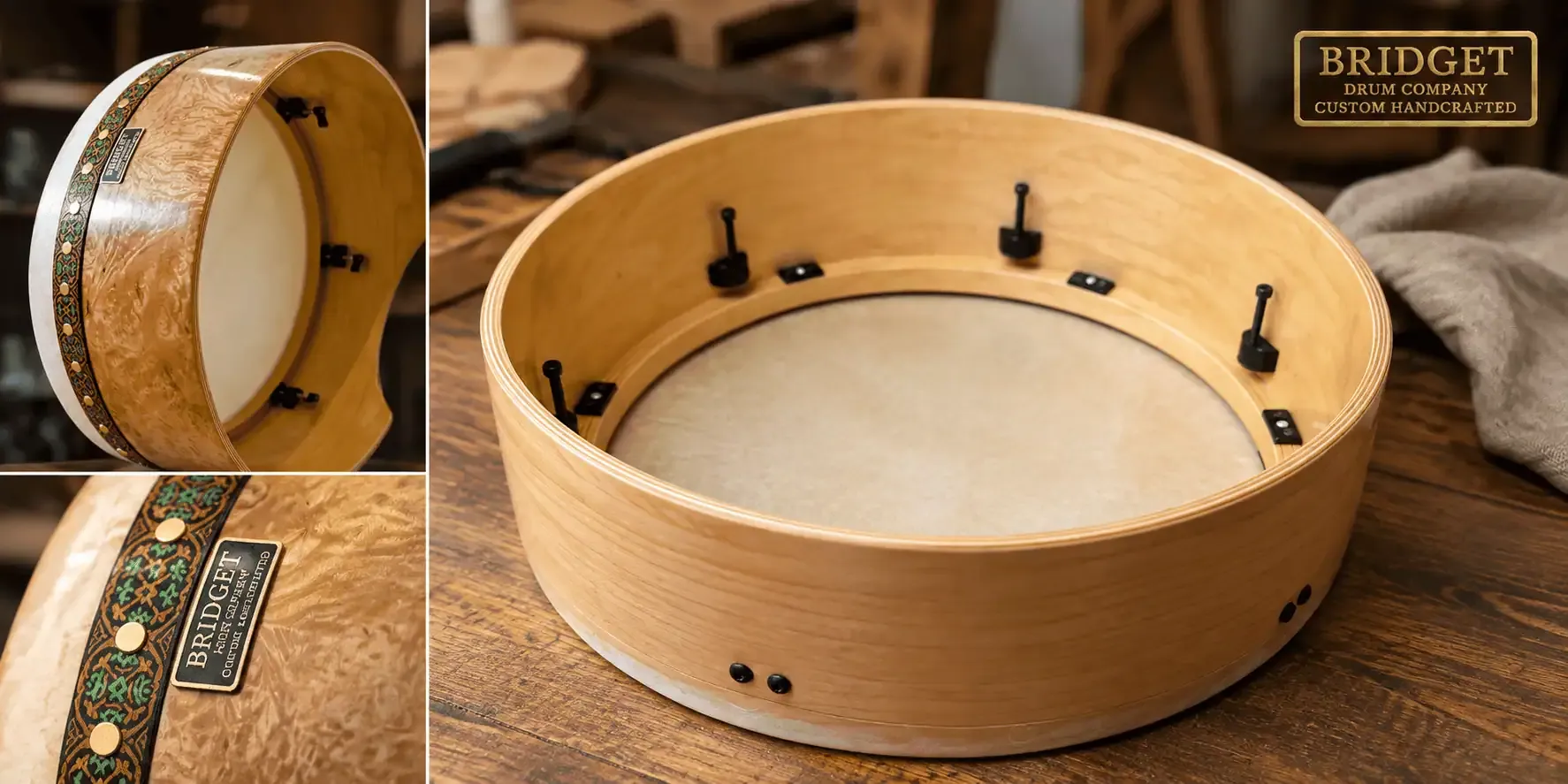
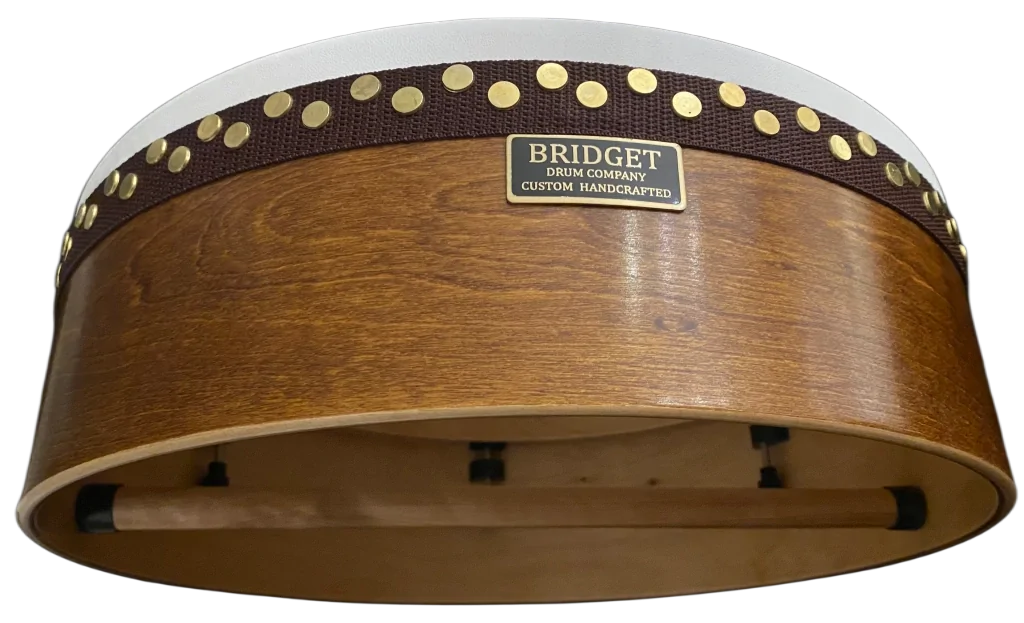
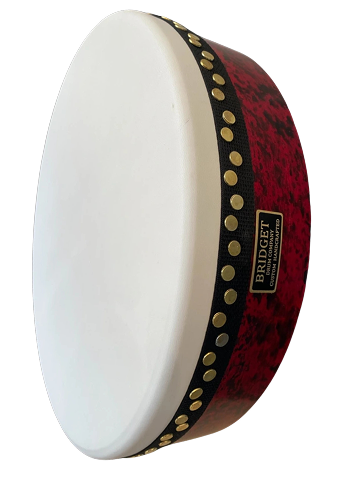
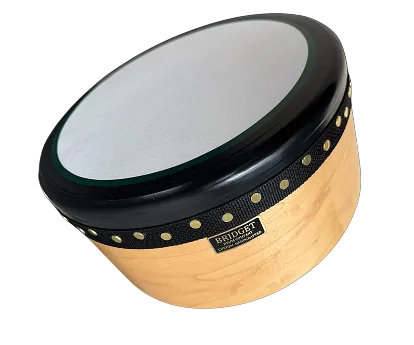
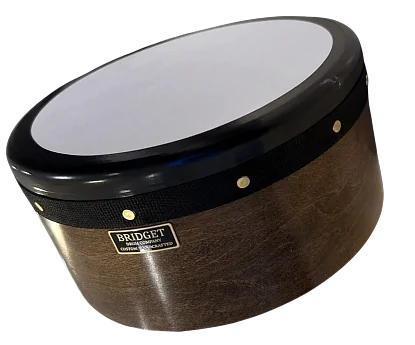
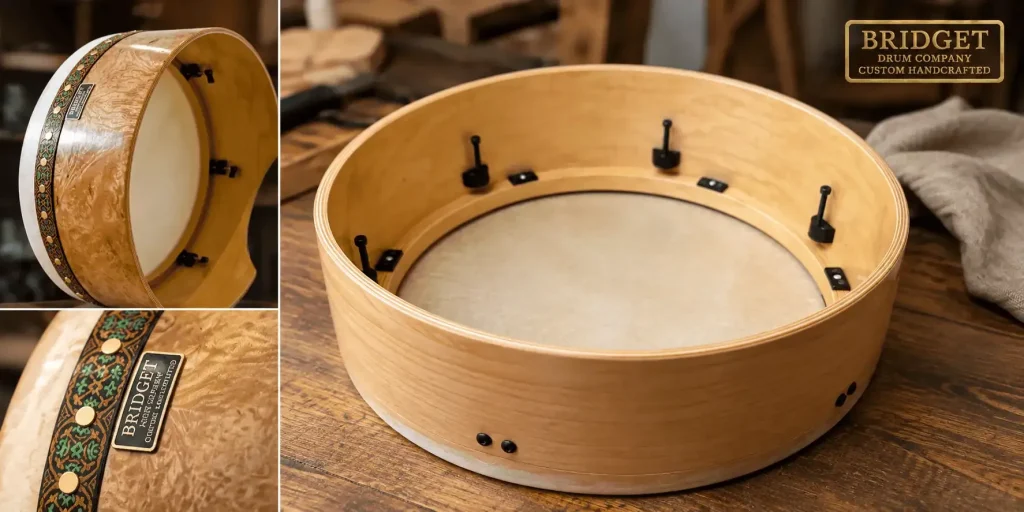
A bodhrán looks simple from across a room. A circle of wood, a stretched skin, maybe a crossbar inside. Pick one up, though, and you start to notice things that have nothing to do with size or price. Those differences come from construction choices most players never see: how the frame was shaped, how the skin was fitted, and the tension sitting across the head before a single beat lands. A genuine handmade drum carries the fingerprints of those specific decisions.
What Makes a Bodhrán Truly Handmade?
Calling a drum handmade means more than simply assembling it. Genuine handmade construction requires active judgment applied at every step. A maker selects material piece by piece, shapes the frame for structural consistency, prepares the skin individually, and micro-adjusts the fit until the drum feels completely right.
At Bridget Bodhran, we know handmade doesn’t automatically mean better. A careless maker can turn out an inconsistent drum just as easily as a rushed factory line. True quality relies on skill, patience, and the standards a maker refuses to skip.
For instance, a common mistake buyers make is judging an instrument purely by its finish in a photograph. A glossy stain tells you nothing about whether the wooden rim is perfectly round, or if the skin tension is balanced across the entire playing surface. Every structural choice affects the final instrument.
When you buy a factory drum, you pay for a standardized specification. When you invest in a handmade bodhrán, you pay for the maker’s eye, their hands, and their experience in discarding bad materials before they ever make it onto the workbench.
The Frame: The Foundation Players Rarely Think About
The frame does more than hold the skin in a circle. It acts as a core part of the acoustic system. Wood choice directly affects density and stiffness, influencing how much the frame vibrates alongside the skin. A frame that flexes unevenly can steal energy from your tipper stroke, potentially softening your projection. One that stays rigid under high tension tends to support a clearer, more direct sonic response.
When selecting wood for our frames, we look closely at grain straightness. A frame with wild, uneven grain might warp under the pull of a tight skin. We frequently work with specific hardwoods like ash, birch, and walnut, and each behaves slightly differently in the shop.
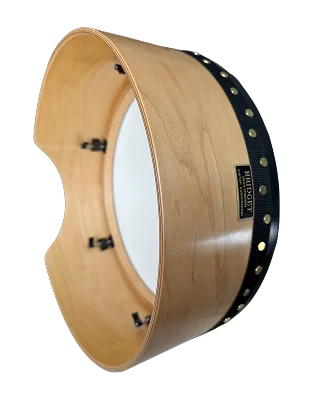
Ash bends beautifully and offers a rigid, durable shell that projects brilliantly in loud pub sessions. Birch provides an incredibly dense, tight foundation that focuses the sound sharply and prevents muddy overtones. Walnut is slightly lighter but offers a warm, dark, resonant character that many studio players heavily prefer.
Internal shape counts just as much. The finish on the inner bearing edge dictates how the skin sits and stretches. If the bearing edge is too sharp, it chokes the skin and stresses the hide prematurely.
If it is flat, it creates unwanted buzzing against the wood. We spend hours refining this specific edge because it forms the physical bridge between the frame and the playing surface. None of this shows up online, but you feel it the first time you strike the drum.
Crossbars and Structural Integrity
Many older or factory-built bodhráns feature a fixed T-bar or a single wooden crossbar secured in the back. Traditionally, makers added these bars to prevent thin, un-reinforced frames from warping under the immense tension of a permanently tacked skin. They also gave old-style players something firm to grip. Today, modern handmade frames are built with thicker, multi-ply or solid steam-bent shells that easily hold their shape independently.
Removing the crossbar opens up the back of the drum completely. This design allows your hand full access to the skin for pressing, bending, and shaping the pitch of your notes. If you play in a modern, melodic style, an open back is essential for fast tonal shifts. However, we still build frames with carefully calculated cutaways or soft inner tapers to ensure the drum rests comfortably against your body and gives your forearm clearance during fast playing.
The Skin: Where Feel and Response Begin
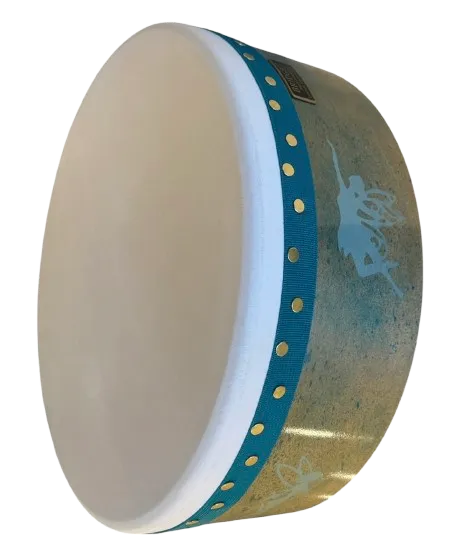
If the frame is the foundation, the skin is where feel and response begin. Most traditional bodhráns use natural goat skin, which is never completely uniform. Thickness varies wildly across a single hide.
A skilled Irish bodhran instrument maker feels for the thicker spine line and thinner belly areas, positioning the skin to balance those variations rather than treating it like a generic sheet of plastic. If I encounter a skin that feels unusually stiff during preparation, I know immediately it requires a different mounting tension than a highly supple hide.
I spend a massive amount of time processing the skin before it ever touches the frame. Raw hides contain natural oils and uneven spots requiring careful scraping and conditioning. A skin that retains too much oil sounds dead, flat, and muddy. A skin stripped too aggressively sounds harsh and brittle.
Fitting matters just as much. A skin stretched unevenly can produce conflicting overtones from one side of the head to the other. Higher tension typically produces a brighter, more focused attack with a quicker decay. Lower tension usually allows a deeper, rounder tone with heavy sustain, though it may respond less crisply during fast reel playing.
Edge Taping: Controlling the Overtones
Many professional bodhráns feature a ring of black electrical tape applied firmly around the outer edge of the skin. This isn’t a repair job. It is a highly deliberate acoustic treatment. Taping dampens the high, ringing overtones that build up near the wooden rim of the drum, focusing the sound heavily into a punchier, more controlled bass frequency.
I apply tape incredibly carefully, stretching it tight to ensure it bonds fully with the skin without leaving dead air bubbles underneath. The width of the tape directly impacts the dampening effect. A wider band kills more high-frequency overtones, while a thinner band leaves a bit more natural ring.
Factory drums often skip this crucial step entirely or use cheap tape that peels away after a few sessions. A proper handmade setup explicitly considers the exact dampening required for that specific piece of unique goat skin.
Tuning Systems: Adapting to Climate and Style
Natural skin reacts constantly to humidity and temperature. A drum that sounds perfect on a humid summer afternoon might tighten up and pitch dangerously high in a dry, artificially heated room during winter. This is why our tunable bodhráns feature integrated mechanical systems that let you manually adjust tension on the fly.
A tuning system is only ever as good as its stability. I use sophisticated multi-point tuning mechanisms that distribute pressure perfectly evenly across the bearing edge. When you turn a tuning peg, it pushes a movable inner rim smoothly upward against the skin.
This lets you quickly drop the tension for a deep, resonant hum or crank it up for tight, popping, aggressive rhythms. Factory tuning systems often use cheap metal brackets that strip easily or push unevenly, causing dead spots on the skin. A carefully engineered tuning ring glides smoothly and holds its position reliably for years.
Why Size Isn’t Everything
Two eighteen-inch bodhráns can sound completely different from each other. The outer diameter sets the general range of pitch and maximum volume, but the actual character comes from how the frame and skin behave together. Frame stiffness interacts directly with skin tension at all times.
Drum depth is equally important. A deep frame, say, five or six inches, creates a physically larger acoustic chamber, which traps more air and pushes a heavier, boomier bass note out to the audience. A shallow frame, around four inches, pushes air out much faster, resulting in a punchier, more articulate sound that quickly cuts through a noisy, crowded pub session.
Construction tolerances play a quiet but incredibly real role. If skin tension is slightly uneven due to a rushed build, certain areas of the head may respond late or sound unpleasantly thin. This becomes blatantly obvious the second you try a rapid triplet pattern with your tipper.
A masterfully built drum tends to respond predictably even at whisper-low volumes, letting you easily use ghost notes without the sound falling apart. Comfort matters too. A frame with expertly smoothed edges and perfectly balanced weight cuts down on hand and forearm fatigue during four-hour sessions. These specific details aren’t cosmetic, they permanently determine whether a drum supports your technique or fights it.
Typical Handmade vs. Standardized Production
Neither approach is automatically wrong for every single player. Your budget, your intended use, and your personal taste all factor into the final decision. The table below outlines exactly where the two distinct approaches typically differ.
| Factor | Typical Handmade Approach | Typical Standardized Production |
|---|---|---|
| Material Selection | Chosen piece by piece based on grain and feel | Sourced in massive bulk to meet a general specification |
| Construction | Each drum can differ slightly based on the specific wood/skin | Built to be as uniform as physically possible across a batch |
| Adjustment | Fit and tension refined individually by hand | Follows standardized assembly with factory preset tension |
| Skin Characteristics | Selected and specifically positioned for the frame’s needs | Applied rapidly via a standardized, uniform mechanical process |
| Consistency | Depends entirely on the maker’s specific skill and attention | Generally consistent from one drum to the next |
| Customization | Often available (e.g., depth, finish, specific skins) | Usually strictly limited to available stock models |
What to Ask Before You Buy
Buying a handmade bodhrán online means relying heavily on the right questions instead of a hands-on physical test. Ask the maker:
- What exact wood did you use for the frame, and why did you choose it?
- How do you personally prepare and position the skin before fitting?
- Is the drum fully tunable, and exactly how does the inner mechanism work?
- What specific playing style is this exact build best suited to handle?
A maker who genuinely understands their craft will answer these questions clearly and without hesitation. At Bodhran.ca, we purposefully build this conversation directly into our process because an informed, educated buyer always gets the most out of their instrument. Every choice, from exact frame thickness to careful skin tension, reflects a direct judgment call that completely shapes how the finished drum will sound in your hands.
Frequently Asked Questions
A careful, proper build often takes several days to a few full weeks. Rushing the wood bending, the skin drying process, or the final tensioning stage usually degrades the final sound. The wood needs proper time to settle into its new shape.
Usually, yes. The higher cost directly reflects individual material selection, meticulous hand fitting, and the sheer time spent manually adjusting each drum rather than running a standardized, automated assembly line. You pay for expertise.
Often, yes. Many skilled makers can easily refit or entirely replace a broken skin on a handmade frame, especially on modern tunable models. Repair options are sometimes far more limited on cheap factory drums with fully glued heads.
This depends entirely on your hand size and preferred playing style. Many adult beginners start successfully around fourteen to sixteen inches. We usually recommend a specific size based on how you intend to use it and the style of music you prefer to play.
Yes. Natural skin responds rapidly to humidity and temperature shifts, tightening or loosening slightly almost every day. Tunable drums let you easily compensate for these frequent atmospheric changes rather than awkwardly living with an unpredictable head.
Tipper choice completely changes your attack. A heavy, thick wooden tipper pulls massive bass out of a loose skin, while a thin, lightweight tipper provides sharp, clicking articulation perfect for tightly tuned drums. Try multiple styles.
Explore Handmade Bodhráns
The details inside a handmade bodhrán can make a noticeable difference in its tone, response, and playability. If you’re ready to experience that craftsmanship for yourself, explore our wide range of handmade bodhráns for sale, available in different sizes and styles for beginners, session players, and experienced musicians. Bodhran.ca ships worldwide, including Canada, the USA, Great Britain, Ireland, and many other countries.