
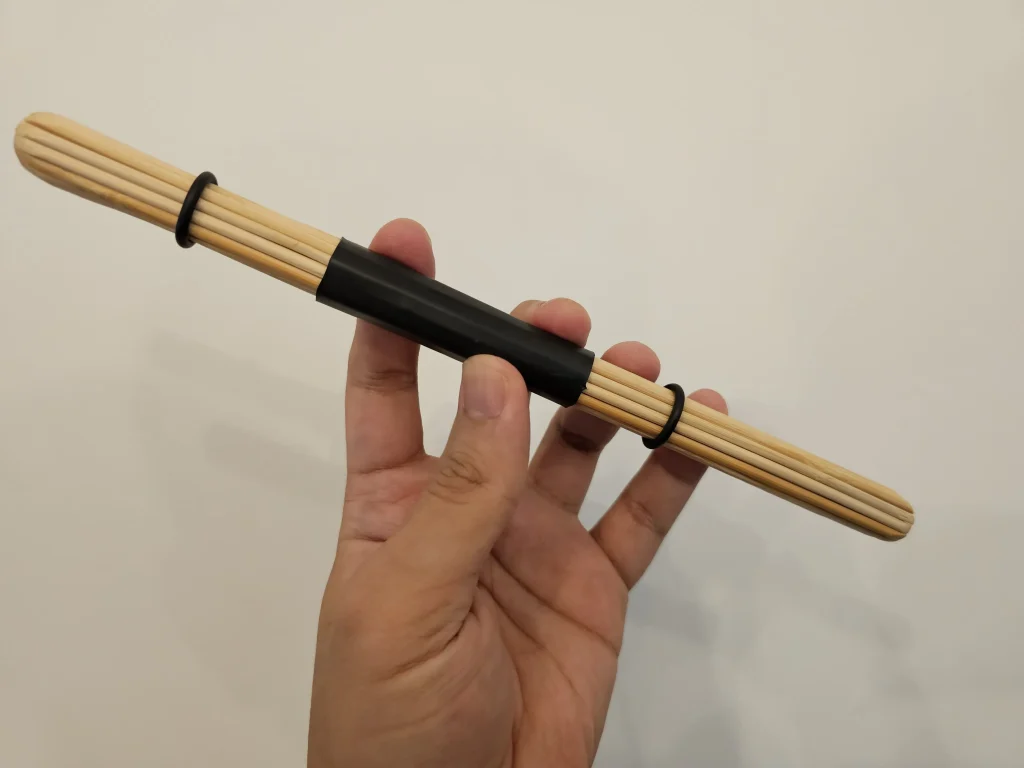
If you are a beginner who has just started learning bodhran drum, one of the most important tools you should consider using is the tipper. While beginners don’t know the crucial role of the tipper in shaping the rhythm, control, and overall sound, the experienced musicians know its value, so always keep the tipper intact to create art with music.
Among the many variations available, two of the most common types are single-ended and double-ended bodhrán tippers. Each offers a distinct playing style, feel, and sound output. Understanding their differences will help you choose the right one based on your skill level, playing goals, and personal comfort.
Let’s break it down in detail.
What Is a Bodhrán Tipper?
A tipper (also called a beater or cipín) is a small stick used to strike the bodhran drum. Traditionally made from wood, especially in a bodhran handmade style, tippers are crafted to balance flexibility, grip, and rebound.
They are designed to create rhythm through controlled striking techniques, allowing players to produce everything from soft pulses to rapid, complex beats.
What Is a Double-Ended Tipper?
A double-ended tipper is the more traditional and widely used type. As the name suggests, it has two striking ends, usually symmetrical or near-symmetrical.
Key Features:
- Two playable ends
- Balanced weight distribution
- Allows rapid back-and-forth motion
- Ideal for continuous rhythm patterns
How It Works
The player holds the tipper in the center and uses a pivoting wrist motion to strike the drum alternately with each end. This creates a natural, flowing rhythm that’s characteristic of traditional Irish music.
Advantages
- Speed and Fluidity
Double-ended tippers allow for fast, continuous playing. The alternating motion makes it easier to maintain rhythm without lifting the hand too much. - Traditional Sound
If you’re aiming for an authentic bodhran drum sound, this is the go-to option. It produces the rolling, dynamic beats commonly heard in folk music. - Versatility
Suitable for both simple and complex rhythms, making it ideal for players progressing in skill.
Drawbacks
- Learning Curve
Beginners often struggle with control at first. The coordination required for alternating strikes can feel unnatural initially. - Less Precision for Accents
While great for flow, it can be slightly harder to isolate specific beats or accents compared to single-ended tippers.
What Is a Single-Ended Tipper?
A single-ended tipper has only one striking end, while the other side is used as a handle. This design is more modern and often favored by beginners or players who prefer controlled, deliberate strikes.
Key Features:
- One striking end
- Handle-like grip
- More controlled movement
- Often slightly heavier on one side
How It Works
Instead of alternating ends, the player uses a forward striking motion, similar to how you might use a drumstick. The rhythm is created through repeated hits and controlled rebounds.
Advantages
- Greater Control
Single-ended tippers are easier to manage, especially for beginners. You can focus on hitting the drum cleanly without worrying about alternating ends. - Better for Accents
If your playing style involves strong, defined beats, this type offers more precision. - Beginner-Friendly
Ideal for those just starting out with the bodhran drum, as it simplifies the technique.
Drawbacks
- Limited Speed
Because you’re relying on a single striking point, achieving very fast rhythms can be more difficult. - Less Traditional Feel
The sound and playing style may differ from traditional Irish bodhran techniques.
Key Differences at a Glance
| Feature | Double-Ended Tipper | Single-Ended Tipper |
| Striking Ends | Two | One |
| Playing Style | Alternating Motion | One-directional strikes |
| Speed | High | Moderate |
| Control | Moderate | High |
| Leaving Curve | Steeper | Easier |
| Traditional Use | Yes | Less Common |
| Best For | Intermediate to advanced players | Beginners and controlled styles |
Which One Should You Choose?
The choice between single-ended and double-ended tippers ultimately depends on your experience level and playing goals.
Choose a Double-Ended Tipper If:
- You want to play traditional Irish rhythms
- You’re aiming for speed and fluidity
- You’re comfortable practicing coordination techniques
- You’re using a high-quality bodhran handmade for performance
Choose a Single-Ended Tipper If:
- You’re a beginner learning basic rhythm
- You prefer control over speed
- You want to focus on clean, defined beats
- You find double-ended tippers difficult to manage
How Tipper Design Affects Sound
Beyond the number of ends, the shape, thickness, and material of the tipper also influence how your bodhran drum sounds.
Thickness
- Thicker tippers produce deeper, louder tones
- Thinner tippers create lighter, sharper sounds
Shape
- Straight tippers offer consistent strikes
- Rounded or bulb-ended tippers add tonal variation
Material
Most bodhran handmade tippers are crafted from hardwoods like ash, hickory, or oak. These provide durability and a balanced rebound.
Can You Use Both?
Absolutely, and many experienced players do.
Switching between single-ended and double-ended tippers can:
- Expand your playing style
- Improve your overall technique
- Help you adapt to different musical settings
For example, you might use:
- A single-ended tipper for slower, controlled pieces
- A double-ended tipper for fast-paced traditional sessions
Tips for Beginners
If you’re just starting out with the bodhran drum, here’s a practical approach:
- Start with a single-ended tipper to build confidence and basic rhythm
- Practice consistent timing and clean strikes
- Gradually introduce a double-ended tipper
- Focus on wrist movement rather than arm motion
- Experiment with different handmade tippers to find your comfort zone
Final Thoughts
Both single-ended and double-ended bodhrán tippers serve a purpose, and neither is objectively “better.” Instead, they offer different approaches to playing the bodhran drum.
- Double-ended tippers excel in speed, rhythm flow, and traditional performance
- Single-ended tippers provide control, simplicity, and precision
If you’re serious about improving your skills, it’s worth experimenting with both, especially when paired with a well-crafted bodhran handmade instrument. The combination of the right drum and the right tipper can significantly elevate your playing experience.
Ultimately, the best choice is the one that feels natural in your hand and helps you produce the sound you’re aiming for.