
Drums have played a very important part in music culture around the world for centuries. Two of the most well-known drums for their distinctive styles and sounds in the music industry are the Bodhran and the Djembe. While both are percussion instruments played by hand, they come from very different traditions, produce distinct sounds, and are used in different musical settings.
So, as a beginner musician, if you are exploring different types of drums, learning about traditional drums, or searching for Irish drums only, we explain in simple words the difference between these two instruments, which can help you make a better choice between Bodhrán and the Djembe.
What Is a Bodhrán?
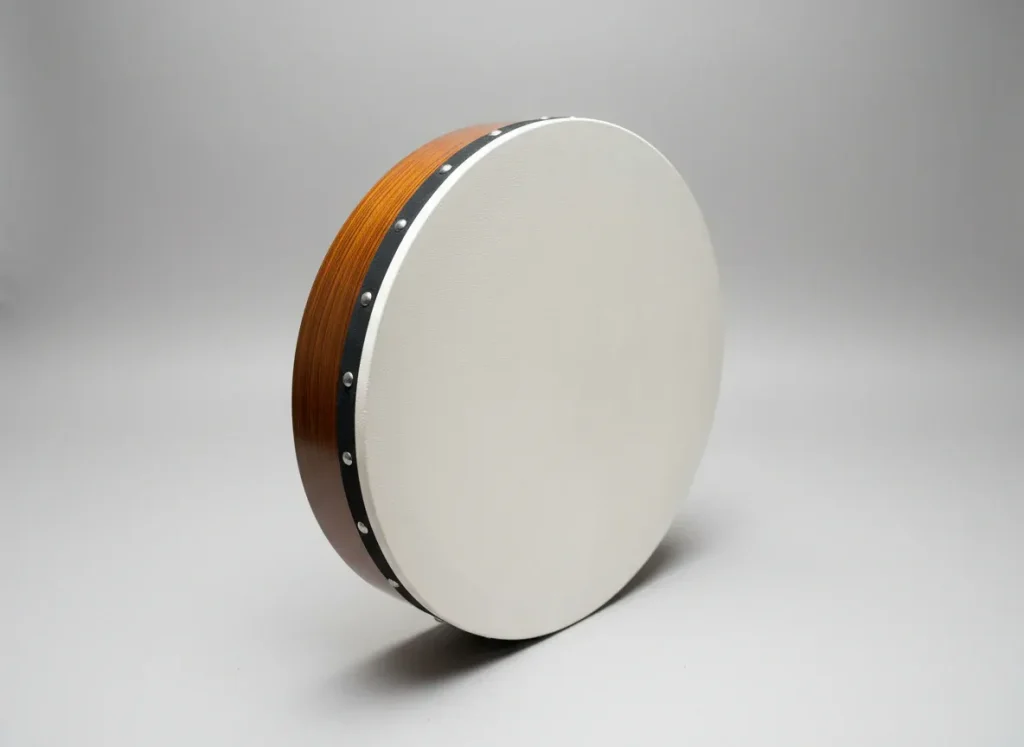
The Bodhrán is a traditional Irish drum that has deep roots in Irish folk music. It is a frame drum, usually circular in shape, with a wooden frame and a goatskin or synthetic drumhead stretched across one side.
It is commonly played using a small double-ended stick called a tipper, although some players also use their hands.
The Bodhrán is especially popular in traditional Irish sessions, where it supports instruments like the fiddle, flute, tin whistle, and accordion. Rather than dominating the music, it often adds rhythm, movement, and energy in a controlled way.
What Is a Djembe?
The Djembe is a goblet-shaped hand drum from West Africa, especially associated with countries such as Mali, Guinea, and Senegal. It is carved from a single piece of hardwood and topped with animal skin, often goatskin.
Unlike the Bodhrán, the Djembe is played entirely with the hands. Players use different hand positions and striking techniques to create a wide range of tones.
The Djembe is known for its powerful volume, expressive sounds, and energetic performance style. It is often used in group drumming, ceremonies, dance music, and modern percussion settings.
Main Difference in Origin and Cultural Background
One of the biggest differences between these instruments is their heritage.
The Bodhrán is closely connected to Irish musical traditions and Celtic culture. It is a symbol of rhythm in folk sessions and live traditional performances.
The Djembe comes from West African drumming traditions and has a strong connection to storytelling, celebration, dance, and community gatherings.
Both instruments carry rich histories, but they represent very different musical worlds.
Difference in Shape and Design
Their physical design affects both sound and playing style.
Bodhrán Design
- Round frame drum
- One drumhead surface
- Open back for hand control
- Lightweight and easy to hold
- Usually played vertically against the body
Djembe Design
- Goblet or chalice shape
- Rope-tuned drumhead
- Hollow wooden body
- Larger and heavier than a Bodhrán
- Played while standing, seated, or strapped
Because of its compact frame, the Bodhrán is often easier to transport and ideal for traditional musicians on the move.
Sound Comparison
The sound of each drum is one of the clearest differences.
The Bodhrán creates a warm, earthy, and responsive tone. Players often change pitch by pressing the inside of the drumhead with the supporting hand. This creates subtle tonal movement and rhythmic texture.
The Djembe produces louder and sharper sounds with three main tones: bass, tone, and slap. It can be extremely dynamic and is capable of cutting through large musical groups.
In Simple Terms:
- Bodhrán: softer, textured, rhythmic, nuanced
- Djembe: loud, bold, deep bass, highly expressive
If you want a subtle traditional Irish drum sound, the Bodhrán stands out. If you want a drum with strong projection and energy, the Djembe may be the better fit.
Playing Technique
The way each drum is played is very different.
A Bodhrán player often uses a tipper to strike both sides rapidly while the other hand controls tone from behind the skin. This creates fast rhythmic patterns often heard in Irish reels and jigs.
Djembe players use palms, fingers, and hand-edge strikes. Technique focuses on precision, hand strength, rhythm control, and dynamic expression.
For beginners, some people find the Djembe easier to start with because it uses direct hand strikes. Others prefer the Bodhrán because its patterns can feel more structured within folk music.
Musical Styles and Use
The Bodhrán is mainly associated with:
- Irish traditional music
- Celtic folk bands
- Acoustic sessions
- Folk festivals
The Djembe is commonly used in:
- African drumming ensembles
- Dance classes
- Drum circles
- Fusion and world music
- Music education programs
So, if your interest is specifically in traditional Celtic music, the Bodhrán is the more natural choice.
Which Drum Is Easier for Beginners?
This depends on your goals.
Choose the Bodhrán if you:
- Love Irish folk music
- Want to learn session-style rhythm
- Prefer a lightweight Irish drum
- Enjoy subtle rhythmic control
Choose the Djembe if you:
- Want louder sound and strong bass
- Enjoy hand drumming
- Like group percussion experiences
- Want a versatile world drum
Both instruments require practice to master, but each offers a rewarding learning journey.
Maintenance and Durability
Natural skin drumheads on both instruments react to humidity and temperature. In dry weather they may tighten, while moisture can soften the sound.
The Bodhrán may need occasional warming or tuning before performances. Many modern versions now include internal tuning systems.
Djembe drums often need rope tuning adjustments over time, especially with regular use.
Synthetic heads are also available for players who want easier maintenance.
Final Thoughts
The Bodhrán and Djembe are both outstanding drums, but they serve different musical purposes. The Bodhrán is a traditional Irish drum known for rhythm, character, and subtle expression. The Djembe is a powerful African hand drum famous for energy, volume, and dynamic range.
Neither is better than the other, it depends on the sound, culture, and playing style you connect with most.
If your heart leans toward Celtic melodies and folk sessions, the Bodhrán is an excellent choice. If you prefer bold rhythms and hand percussion, the Djembe may be the perfect fit.