
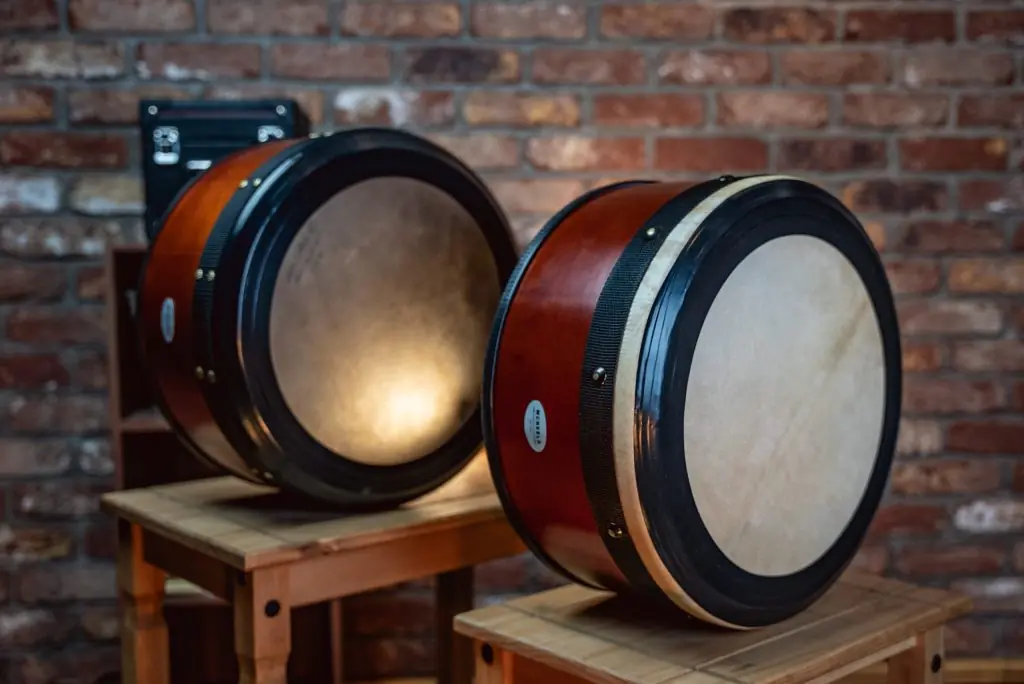
The bodhrán is a traditional Irish drum that has a simple look but a rich, lively sound. It’s an important part of Irish music, giving rhythm and energy to songs and dances. If you’re curious about this drum or thinking of getting one, this guide will explain what it is, its history, how it’s made, how to play it, and what to look for when buying one.
What Is a Bodhrán Drum?
At its core, a bodhrán is a frame drum, meaning it consists of a drumhead stretched over a round frame. Unlike many drums, it produces sound not from hitting a suspended skin over a shell deep enough to resonate like a snare or tom, but through a shallow, broad surface that resonates with every touch.
Basic characteristics:
- Shape: Round frame
- Body: Wooden hoop/frame
- Head: Stretched animal skin (traditionally goatskin; synthetic options exist)
- Size: Typically 14–18 inches in diameter
- Depth: Relatively shallow compared with other drums
- Sound: Warm, earthy, rhythmic, ranging from deep bass thumps to high slaps
The surface of the bodhrán can be struck with the hand, but most contemporary players use a specialized beater called a tipper, which allows greater rhythmic articulation.
A Short History
The exact origin of the Irish bodhrán is somewhat debated, but most scholars agree that:
- The bodhrán’s roots are ancient, linked to frame drums found across Europe and the Middle East.
- It was played in Ireland for centuries, though not always widely documented.
- In earlier centuries, it may have been used for both musical and functional purposes, including signaling and ceremonial uses.
The earliest clear references to the bodhrán in Ireland date back to the 18th and 19th centuries, but it was primarily a folk instrument rather than a concert stage presence.
It wasn’t until the 20th century, particularly the folk revival movements of the 1960s and ’70s, that the bodhrán became a staple in the modern Irish music scene. Players such as Paddy Glackin, Tommy Hayes, and later Johnny “Ringo” McDonagh helped popularize the instrument within sessions and recordings.
Anatomy of the Bodhrán
Even though it looks simple, the bodhrán has several key parts:
1. The Frame
- Traditionally made from ash wood or other hardwoods.
- Offers structural integrity and resonant warmth.
- Thickness and craftsmanship affect tone and durability.
2. The Head
- Originally goatskin; modern variants also use synthetic skins.
- Natural skins provide warm, organic tones; they’re sensitive to humidity, temperature, and touch.
- Synthetic heads offer consistency and resilience in varied climates.
3. The Tipper (Beater)
- Often made from wood, such as hickory or ash.
- Shapes vary: double‑ended, baton‑style, or tapered designs.
- The way the tipper is held and moved defines articulation, speed, and rhythmic feel.
4. Internal Crossbars or Tuning Mechanisms
- Traditional bodhráns had no internal hardware.
- Contemporary models may include internal tone rings, crossbars, or tuning systems (similar to those on a banjo) to adjust head tension.
How to Play the Bodhrán
What makes the bodhrán special is how the hand inside the drum controls the sound. The hand presses on the skin to change pitch, while the other hand hits it with a tipper or fingers.
Playing Techniques
- Tipper technique: Most players use a wooden tipper to strike the skin with quick, controlled movements.
- Pitch control: Pressing harder or softer with the inside hand changes the sound.
- Hand strikes: Some players use bare hands for softer, gentle tones.
Styles of Play
- Kerry style: Uses a two-ended tipper and wrist motion for fast tunes like reels and jigs.
- Top-End style: Strikes near the rim for higher pitches.
- Bare-hand style: Creates soft, textured rhythms.
Role in Irish Traditional Music
The bodhrán’s energy holds a session together. In an ensemble, its functions include:
- Timekeeping: Driving tempo for reels, jigs, slip jigs, hornpipes, and polkas.
- Accentuation: Highlighting rhythmic beats (e.g., downbeats, backbeats).
- Interaction: Conversing with other instruments — fiddles, flutes, uilleann pipes, accordions, and vocals.
- Dynamic Flow: Adjusting rhythmic intensity based on tune structure.
Unlike a metronome, a skilled bodhrán player breathes with the music, responding to variations in tempo and phrasing organically.
Why the Bodhrán Became Popular
Several factors fueled its rise:
- Folk Revival: Increased interest in traditional arts spotlighted indigenous instruments.
- Session Culture: Bodhrán added depth and pulse to group playing.
- Recording Exposure: Folk and world music albums featured the drum more prominently.
- Pedagogy and Festivals: Teaching materials, workshops, and competitions broadened participation.
Today, the bodhrán isn’t just Irish, it’s part of global percussion practices, found in Celtic, fusion, and even experimental music contexts.
Caring for a Bodhrán
To keep your bodhrán in good condition:
- Avoid extreme heat or humidity. Natural skins can tighten or loosen.
- Store flat or hanging, not leaning on the skin.
- Wipe clean after use to remove oils/sweat.
- Adjust tuning gradually. If your bodhrán has a tuner, make small adjustments.
Natural skin bodhráns may need seasonal tuning to compensate for climate changes.
Learning the Bodhrán: Tips for Beginners
If you’re starting out:
- Focus on steady rhythm before complex patterns.
- Practice with metronome or recordings of jigs/reels to internalize tempo.
- Experiment with internal hand pressure to understand how pitch changes.
- Watch experienced players in videos or live sessions to observe technique.
- Take lessons or attend workshops, even a few guided sessions fast‑tracks progress.
Famous Bodhrán Players to Explore
While many players have contributed to the bodhrán’s development, a few notable names include:
- Tommy Hayes – Innovative and influential in modern bodhrán style.
- Johnny “Ringo” McDonagh – Renowned for rhythmic nuance and session presence.
- John Joe Kelly – Brought bodhrán into global fusion contexts.
- Benny McCarthy and Eamon Murray – Known for creative, forward‑thinking approaches.
Listening to these artists showcases the expressive range of the drum, from foundational pulse to dynamic rhythmic artistry.
Conclusion
The Irish bodhrán drum is much more than a simple folk instrument. It bridges rhythmic function and expressive voice. Its depth of tone, variety of playing techniques, and cultural resonance make it central to traditional Irish music and a thrilling instrument for percussionists everywhere.
Whether you’re a beginner curious about Celtic rhythms or an experienced musician exploring world percussion, understanding the bodhrán opens the door to rich rhythmic traditions and creative possibilities.