
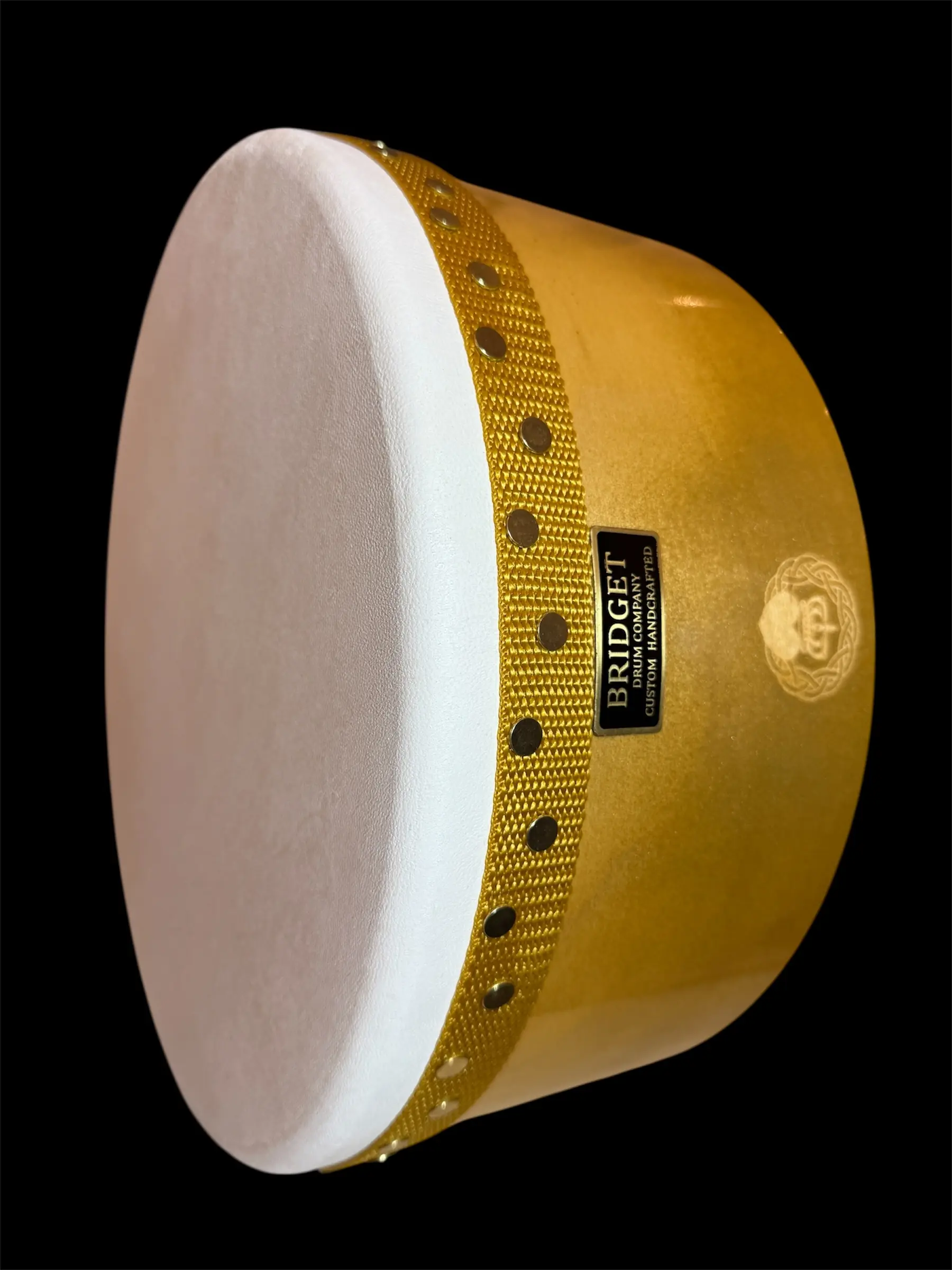
The bodhrán has evolved far beyond simple timekeeping. Today, its voice ranges from subtle tonal expression to powerful rhythmic propulsion, largely shaped by two contrasting approaches: Kerry style and Top End style. The Kerry style bodhrán emphasizes tonal depth, inside-hand pitch control, and musical phrasing that interacts closely with melody instruments.
In contrast, Top End playing prioritizes articulation, speed, and dynamic projection. Though both styles serve traditional Irish music, they reflect different philosophies of accompaniment and sound.
Kerry Style vs Top End Style Bodhrán — What’s the Difference?
The bodhrán is Ireland’s most iconic frame drum, at once rhythmic backbone, expressive solo instrument, and a vehicle for dynamic ensemble interplay. Yet, within its broad tradition, two distinct stylistic approaches have emerged among modern players: Kerry style and Top End style. These names refer not specific instruments, but rather technique, sound goals, and performance philosophy.
At its heart, the comparison is about where the tone comes from on the drum, how the beater or tipper is used, and what musical roles the player emphasizes. While many contemporary players blend elements of both, understanding the defining traits of each style helps both learners and seasoned players sharpen their craft.
1. Origins and Cultural Background
Kerry Style
“Kerry style” refers to a regional stylistic approach associated with players from County Kerry and the southwest of Ireland. Kerry has a rich tradition of Irish music, particularly intricate reels, hornpipes, jigs, slides, polkas, and set dances, and its bodhrán players developed a style that supports the local repertoire’s rhythmic drive and musicianship.
The style isn’t institutionalized, but it reflects:
- A deep musicality rooted in accompaniment
- Emphasis on tonal variety
- A blend of rhythmic support and expressive fill work
- Integration with accordion, flute, fiddle, and uilleann pipes
This style matured as bodhrán evolved from a purely time‑keeping instrument into one capable of nuanced phrasing.
Top End Style
“Top End style” developed more broadly among bodhrán players influenced by modern innovations, contemporary playing techniques, and international performance contexts. The term “Top End” refers to the player’s use of the upper side of the drum’s playing surface and often to a more overtly percussive, aggressive, and driving sound.
It’s associated with:
- Increased use of power accents
- Emphasis on projection in group or stage settings
- Techniques oriented around fast tipper manipulation
- This style is widespread across Ireland and internationally.
2. Hand Position and Grip
Kerry Style
The hallmark of Kerry style playing is a relaxed, controlled grip that promotes subtle tonal shaping:
- Tipper Hold: The grip tends to be light but secure, often using a traditional 3‑point hold, thumb, index, and middle finger, balanced mid‑shaft.
- Hand Relaxation: The fingers remain relatively relaxed, enabling fluid motion and nuanced stick control rather than rigid wrist action.
- Secondary Hand (Inside Hand): This hand presses on the inside of the drumhead to shape the pitch and color of the tone. Kerry players use precise pressure changes to facilitate pitch bends and resonant timbral shifts.
The result is a hand position that favors melodic phrasing and dynamic shading rather than sheer volume.
Top End Style
In contrast, Top End style often uses:
- Forward Grip: Closer to the top end of the tipper (hence the name), with more rigid wrist support.
- Stronger Wrist Action: Players generate power through wrist snap and less forearm motion.
- Inside Hand: Still used for tone, but with less movement into subtle pitch bending than in Kerry style.
Overall, Top End grip focuses on power, speed, and a more driving feel than nuanced tonal color.
3. Stroke Technique and Sound Production
Kerry Style
Kerry style prioritizes tone modulation and musical phrasing, not just steady rhythm.
Key elements:
- Double and Triple Strokes: Smoothly executed with controlled rebound, emphasizing melodic rhythm rather than accent‑only patterns.
- Rolls and Triplets: Integrated as expressive elements; often used to ornament rather than simply to fill space.
- Pitch Bending: Core to the sound. Slight pressure from the inside hand can raise or lower pitch, adding expressive contour.
- Dynamic Shading: Volume changes and tone color are central, quiet, mid‑range, and bright tones are all used intentionally to match the music.
Sound quality is rich, warm, and musical, with emphasis on intonation over power.
Top End Style
Top End style emphasizes:
- Articulation and Drive: Clear, sharp rhythmic articulation that pushes the groove forward.
- Consistent Surface Strokes: Many strokes are aimed closer to the edge of the head for a crisp, cutting tone.
- Accented Beats: Strong accent patterns drive reels and jigs with assertive pulse continuity.
- Limited Pitch Variation: Focus is generally on rhythmic power and clarity rather than expressive pitch manipulation.
This results in a louder, more straightforward rhythmic feel, ideal for ensemble settings where presence is key.
4. Tone Goals — Kerry vs Top End
Kerry Style Tone
Kerry players seek tonal richness and subtlety. Their goal is to craft a voice that interacts with melody:
- Warm fundamental tones
- Clear, mid‑range resonance
- Expressive color changes
- Nuanced dynamic range
Take a slow jig or a hornpipe: Kerry style adapts intricately, weaving rhythmic support into the ensemble’s emotional arc.
Top End Style Tone
- Top End players aim for projection and rhythmic impact:
- Crisp, driving strokes
- Higher attack energy
- Put‑through sound that emphasizes tempo
- Less interior pitch variation
This sound is highly effective in sessions, bands, and recordings where a strong rhythmic anchor is required.
5. Visualization: Playing Surface and Contact
Kerry Style
- Strikes often closer to the center for full tone.
- Uses inside hand pressure for pitch manipulation.
- Stroke paths are more fluid and varied, not strictly linear.
Top End Style
- Strikes often closer to the edge for sharper attack.
- Inside hand still shapes tone but with less bending.
- Stroke paths have emphasis on consistency and power.
6. Summary Comparison
| Kerry Style | Top End Style |
| Primary Goal | Expressive tone, musical phrasing | Rhythmic drive and projection |
| Grip | Balanced and relaxed | Stronger wrist, forward |
| Inside Hand Use | Tonal shaping and pitch bends | Tone support, less pitch bending |
| Stroke Focus | Center–tonal variety | Edge–crisp attack |
| Tone | Warm, nuanced | Sharp, assertive |
| Best For | Musical subtlety, ensemble interplay | Driving rhythm, fast sets |
| Tuning | Medium/lower for resonance | Higher for snap |
| Learning Emphasis | Phrasing and dynamics | Speed and articulation |
Final Thoughts
The distinction between Kerry style and Top End style is not one of “better” versus “worse.” Rather, it’s a difference in musical philosophy:
Kerry style is holistic and melodic; it treats the bodhrán as an instrument of emotional expression as much as rhythmic support.
Top End style is centered on pulse, presence, and rhythmic clarity, ideal for leading or locking into a tight groove.
Modern players increasingly borrow from both. A skilled bodhrán player may use Kerry style’s tonal shaping in one tune, then switch to Top End articulation for a driving reel.
For players seeking deep musicality and expressive range, Kerry style’s focus on tone, hand control, and inside hand nuance provides a rich, rewarding path. For those prioritizing power, speed, and stage presence, Top End methods can be highly effective.
Ultimately, your choice should be guided by your musical context, aesthetic goals, and the repertoire you most often accompany.